
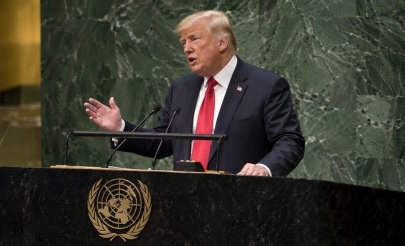
In a move that could shift the narrative around artificial intelligence, President Donald Trump has proposed rebranding AI as “super intelligence,” aiming to highlight its capabilities more accurately. This redefinition could influence how government documents refer to the technology, potentially impacting public perception and policy development around AI.
Speaking at the United Nations General Assembly in New York, Trump expressed his belief that the term “artificial” diminishes the perceived power of AI. He also took a firm stance against international controls on AI, dismissing concerns about its risks as overblown and advocating for continued technological advancement. This perspective aligns with the administration’s focus on economic growth, as Trump emphasized AI’s potential to drive economic change on a scale not seen since past technological revolutions.
Trump’s remarks arrive amid global discussions on how to responsibly manage advanced AI systems. While over 20 political leaders have recently pushed for increased international cooperation, safety testing, and common standards, Trump has rejected the idea of a global system for regulating AI, underscoring a preference for national rather than international oversight.
Beyond the rebranding effort, Trump has also floated the idea of establishing an “AI Force” and appointing an AI czar to oversee the technology within the United States. However, specifics on how this proposed structure would function remain sparse, leaving room for speculation on its potential impact.
Notably, the term “superintelligence” already holds a defined meaning in AI research, typically referring to a hypothetical system that surpasses human intelligence across various tasks. Trump’s broader application of the term could reshape discussions and understanding of AI’s role in society and industry.