
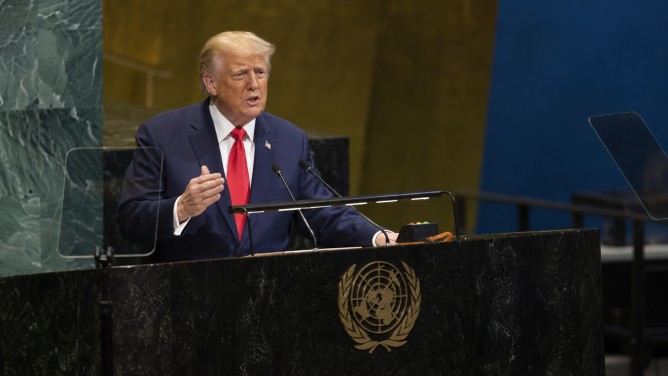
As tensions with Iran continue to unsettle global markets, U.S. President Donald Trump is anticipated to use his upcoming address at the United Nations General Assembly to justify his administration’s military actions in the region. The ongoing conflict has sparked considerable concern, particularly regarding the potential disruptions around the strategic Strait of Hormuz, a vital shipping route for global oil supplies.
Trump’s speech is expected to outline how his policies have allegedly bolstered the United States’ international standing, presenting him as a leader balancing military assertiveness with diplomatic initiatives. This approach aims to reassure allies and stakeholders of Washington’s commitment to maintaining stability amidst the geopolitical and economic turbulence.
In addition to addressing the situation with Iran, Trump is poised to highlight his administration’s efforts toward resolving the long-standing Gaza conflict. This includes proposals aimed at disarming Hamas and facilitating the reconstruction of Gaza, although tangible progress in these areas remains limited.
The UN address also provides Trump with a platform to critique international institutions, notably the United Nations itself, which he has previously disparaged upon resuming office. His remarks are likely to reflect his administration’s stance on reforming these global bodies to align more closely with U.S. interests.
During his visit to New York, President Trump is scheduled to meet with several international leaders, including Ukrainian President Volodymyr Zelenskyy and Japanese Prime Minister Sanae Takaichi. These engagements underscore the multifaceted diplomatic strategies the administration is pursuing on the world stage.
Complementing Trump’s address, UN Secretary-General António Guterres is expected to emphasize global conflicts and the rapid evolution of artificial intelligence in his opening remarks, highlighting the diverse challenges facing the international community.