
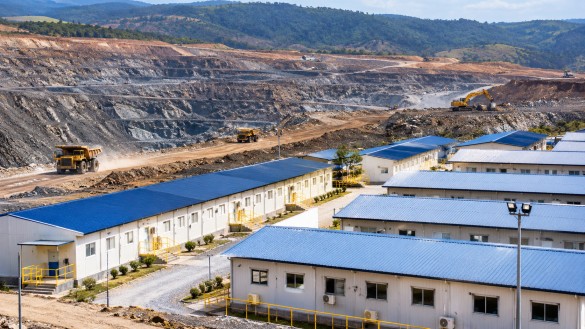
The development of Indonesia’s Elang copper-gold mine on Sumbawa Island underscores the critical need for comprehensive workforce accommodation and supporting infrastructure. As PT Amman Mineral Nusa Tenggara (AMNT) progresses with this massive project, estimated at an initial investment of Rp80 trillion, meticulous planning is necessary for housing the numerous construction workers, engineers, and operational personnel involved.
Elang is one of the world’s largest undeveloped copper-gold deposits, boasting approximately 2.5 billion tonnes of ore reserves. The project’s construction is set to unfold in stages, following environmental impact assessments and engineering designs. A significant feature of this development is the proposed long-distance overland conveyor, which will connect the Elang mine with the existing facilities at the Batu Hijau mining complex, including mineral processing, power generation, port, and smelting operations.
Beyond the extraction and production facilities, large mining projects like Elang require robust infrastructure to support daily operations in remote locations. This includes worker accommodation, site offices, dining areas, medical services, sanitation facilities, and recreational spaces. At peak construction periods, camps may need to accommodate thousands of contractors and specialists, necessitating careful infrastructure planning.
Different prefabricated building systems are being considered for the various stages and functions within the mining camp. Modular worker accommodation can provide standardized facilities like bedrooms, toilets, and showers, reducing the amount of construction work needed on-site. K-type prefabricated buildings are suitable for temporary dormitories and project offices, while T-type structures can be adapted for larger communal spaces such as dining halls, kitchens, and laundry facilities.
As the project evolves, modular site offices will offer flexibility for project managers, engineering teams, and administrative staff, allowing for expansion or reconfiguration as needed. Long-term facilities, such as management offices and employee activity centers, may use light steel buildings designed to withstand local environmental conditions and comply with safety regulations.
The scale of the Elang mine development highlights the importance of integrating camp planning into the broader mining infrastructure strategy. With potentially hundreds of buildings involved, coordinated design and production scheduling are essential to meet workforce and accommodation demands effectively. As the project advances, these considerations will play a crucial role in its successful implementation.
LINCHENGLONG
Guangdong Yashun Housing Technology Co., Ltd.
[email protected]
Legal Disclaimer:
The information contained in this article has been provided by independent third-party contributors, clients, or content partners. We do not independently verify the accuracy, completeness, legality, ownership, licensing, or reliability of submitted content, including text, images, videos, trademarks, or other media materials. The submitting party is solely responsible for ensuring that all content, including images and media assets, complies with applicable copyright, trademark, licensing, and intellectual property laws. We disclaim liability for any unauthorized use of copyrighted or proprietary materials by third parties. If you believe that any content published on this platform infringes your intellectual property rights, kindly contact the author above for prompt review and resolution.