
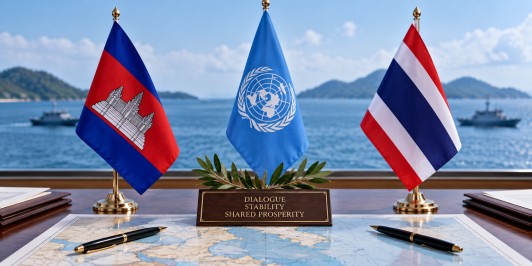
Cambodia and Thailand have embarked on a United Nations-supported conciliation process aimed at resolving a protracted maritime boundary dispute in the Gulf of Thailand. This initiative follows the guidelines set by the United Nations Convention on the Law of the Sea (UNCLOS), with foreign ministers from both nations presenting opening statements at the inaugural meeting of this process. The dialogue focuses on establishing a definitive maritime boundary, with Cambodia also proposing a joint development arrangement to allow shared resource utilization in the contested area.
The dispute, spanning over 25 years, involves approximately 26,000 square kilometers of waters rich in natural resources, notably oil and natural gas, underscoring its economic significance. Cambodia’s push for a single maritime boundary is met with Thailand’s preference for addressing boundary delimitation through the conciliation process. Previously, Bangkok had advocated for direct negotiations to resolve the issue and has assured its commitment to participating in the current proceedings in good faith.
In 2001, both countries reached an agreement to jointly develop resources within the disputed area. However, this arrangement was terminated by Thailand in May, following heightened tensions due to deadly border clashes. The recent initiation of the compulsory UNCLOS conciliation process by Cambodia in June marks a significant step towards potentially resolving the longstanding impasse.
The independent panel overseeing this conciliation process has the authority to issue recommendations, although it is important to note that these findings are not legally binding for either party. Despite this, the engagement of both nations in this UN-backed process highlights a commitment to seeking a peaceful and mutually beneficial resolution to their maritime boundary dispute.