
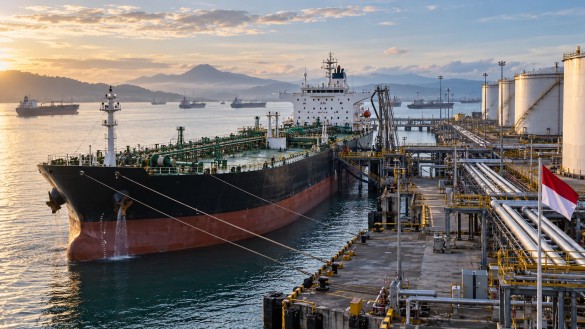
Indonesia is taking significant steps to diversify its gasoline imports by seeking new supplies from India and China, aiming to reduce its dependence on Singapore, a key regional oil refining hub. The move comes as tensions rise between Indonesia and Singapore over energy supplies, with Jakarta recently reducing its natural gas exports to Singapore.
Indonesian Energy Minister Bahlil Lahadalia announced plans to visit India, China, and other countries to explore potential supply agreements. He emphasized the government’s intention, under President Prabowo Subianto’s leadership, to secure long-term contracts to bolster Indonesia’s fuel security. Currently, Indonesia imports RON 90 gasoline from a neighboring country, which Bahlil did not specify, but Singapore has historically been a major supplier.
The initiative to diversify gasoline imports is part of Indonesia’s broader energy strategy to strengthen domestic energy security and minimize reliance on a single trading partner. The recent reduction in natural gas exports to Singapore, amounting to approximately 31 billion British thermal units per day, has added to the urgency of these efforts. Bahlil asserted that the reduction was within the limits of existing contracts, dismissing any breach of commitments.
While Singapore has downplayed the impact of the reduced gas supply on its overall energy needs, Prime Minister Lawrence Wong has stressed the importance of honoring contractual agreements. In response to the situation, Singapore’s Foreign Minister Vivian Balakrishnan is expected to meet with his Indonesian counterpart, Arrmanatha Nasir, to address the ongoing energy-related disagreements.
Indonesia’s pursuit of alternative gasoline suppliers highlights its commitment to diversifying energy sources and reducing its dependence on Singapore, amid the backdrop of regional energy supply challenges. As Jakarta progresses with its plans, the outcome of these diplomatic and trade negotiations will likely shape the future of energy dynamics in the region.