
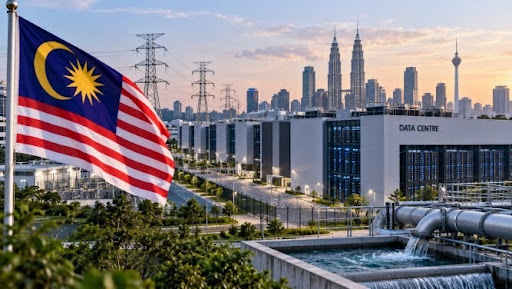
Malaysia is witnessing a surge in investments in data-centre and cloud-computing infrastructure, driven by the rising demand for artificial intelligence, cloud services, and digital applications. This growth is opening up new avenues for employment and business opportunities within the country, although it also poses challenges for existing infrastructure, including electricity and water supply. During the first half of 2026, Malaysia saw a remarkable RM95.8 billion approved for data-centre and cloud-computing projects, making up nearly 44% of the nation’s total approved investments in that timeframe. Johor and the Klang Valley have become pivotal hubs for the establishment of these new facilities.
The burgeoning sector is fueling demand for a skilled workforce in various fields such as data science, engineering, cybersecurity, telecommunications, and construction. Additionally, it provides Malaysian companies with opportunities to offer services in construction, engineering, and electrical work. However, the continuous operation of data centres necessitates significant electricity usage for powering servers and cooling systems. In December 2025, electricity demand from data centres in Peninsular Malaysia reached 849 megawatts, with projections estimating a rise to 4,811 megawatts by 2030. In response, the government plans to add up to 9,600 megawatts of power-generation capacity between 2028 and 2031 to cope with burgeoning demand and replace outdated power plants.
Water usage is another concern, as data centres rely heavily on cooling systems that consume large volumes of water. To address this, authorities are advocating for the use of reclaimed and alternative water resources instead of solely depending on treated drinking water. Johor, for instance, has outlined plans to supply up to 12 million litres of reclaimed water daily for data-centre cooling. Similar initiatives are underway in the Klang Valley, demonstrating a commitment to sustainable water management in line with the industry’s expansion.
The Malaysian government has also set strict requirements for new data-centre projects to ensure they have adequate power and water supplies while adhering to energy-efficiency standards. Specifically, data centres are required to meet Power Usage Effectiveness (PUE) targets, with colocation facilities having a limit of 1.6 and hyperscale operators a limit of 1.4. These measures are part of a broader effort to ensure that the rapid growth of the data-centre sector does not place undue pressure on Malaysia’s critical resources.
While the expansion of Malaysia’s data-centre industry is poised to provide substantial economic and employment benefits, the authorities are increasingly focused on balancing growth with sustainable resource management. By implementing strategic initiatives and regulatory frameworks, the country aims to support the industry’s development while safeguarding its vital electricity and water supplies.